
Tacos al Pastor: The Story and Recipe Behind Mexico’s Iconic Street Food
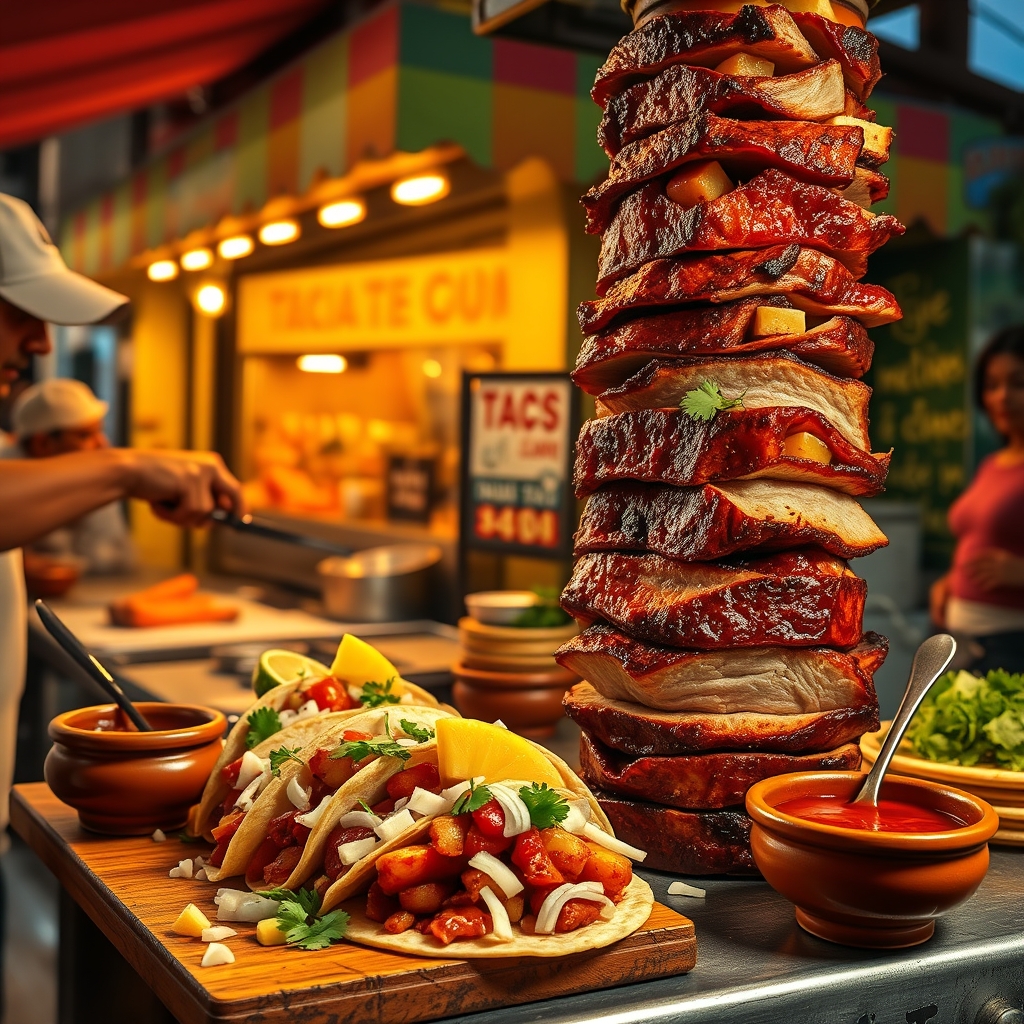
Few dishes capture the vibrant spirit of Mexican street food quite like tacos al pastor. With their tender, marinated pork, smoky char, and bursts of sweet pineapple, these tacos are a symphony of flavors that have won hearts far beyond Mexico’s borders. Yet, their origins tell a story of cultural fusion, migration, and culinary innovation that makes them even more fascinating.
The Lebanese Roots of a Mexican Classic
The story of tacos al pastor begins not in Mexico, but in the Middle East. In the early 20th century, Lebanese immigrants arrived in Mexico, bringing with them their beloved shawarma—spit-roasted meat seasoned with aromatic spices and served in flatbread. The technique of slow-roasting meat on a vertical spit was entirely new to Mexico, but the locals quickly adapted it to their own tastes and ingredients.
By the 1930s, Mexican cooks had transformed shawarma into something distinctly their own. They swapped lamb for pork, a more widely available meat in Mexico, and marinated it in a blend of guajillo and ancho chilies, garlic, vinegar, and spices like cumin and oregano. The result was tacos al pastor—”shepherd-style” tacos, a nod to the dish’s pastoral origins, even though the meat was no longer lamb. The addition of pineapple, a tropical fruit that caramelizes beautifully on the grill, became a signature touch, adding a sweet contrast to the savory, spicy meat.
The Art of the Marinade: Flavor That Starts Hours Ahead
The secret to unforgettable tacos al pastor lies in the marinade. This isn’t a last-minute affair; the pork needs time to absorb the complex flavors of the chilies, spices, and acidity. Here’s how to create the perfect marinade:
Ingredients for the Marinade:
- 3 dried guajillo chilies, stems and seeds removed
- 2 dried ancho chilies, stems and seeds removed
- 4 cloves garlic, peeled
- 1 small white onion, roughly chopped
- 1/2 cup white vinegar
- 1/4 cup pineapple juice (fresh is best)
- 2 tablespoons achiote paste (for color and earthy flavor)
- 1 teaspoon ground cumin
- 1 teaspoon dried oregano (preferably Mexican)
- 1 teaspoon salt
- 1/2 teaspoon black pepper
- 1/4 teaspoon ground cloves
Preparing the Marinade:
Begin by toasting the dried chilies in a dry skillet over medium heat for about 30 seconds per side, just until fragrant. Be careful not to burn them, as this can make the marinade bitter. Once toasted, soak the chilies in hot water for 15 minutes to soften. Drain the chilies and transfer them to a blender along with the garlic, onion, vinegar, pineapple juice, achiote paste, cumin, oregano, salt, pepper, and cloves. Blend until smooth, adding a little water if needed to achieve a thick but pourable consistency. Taste and adjust the seasoning if necessary—this is your chance to balance the heat, acidity, and sweetness.
Marinating the Pork:
For the best results, use thinly sliced pork shoulder or pork loin, cut into strips about 1/4-inch thick. Place the pork in a large bowl or resealable plastic bag and pour the marinade over it, ensuring every piece is well coated. Cover and refrigerate for at least 4 hours, though overnight is ideal. The longer the pork marinates, the deeper the flavors will penetrate.
Cooking the Pork: The Vertical Spit and Beyond
Traditionally, tacos al pastor are cooked on a trompo, a vertical spit that rotates slowly over an open flame. The marinated pork is stacked onto the spit in layers, with slices of pineapple tucked between them. As the meat cooks, the fat renders and bastes the outer layers, creating a crispy, caramelized exterior. The taquero shaves off thin slices of meat as it cooks, ensuring each taco gets a mix of tender, juicy pork and crispy edges.
If you don’t have a trompo at home (and let’s be honest, most of us don’t), you can achieve similar results with a grill or a well-seasoned cast-iron skillet. Here’s how:
Grill Method:
Preheat your grill to medium-high heat. Thread the marinated pork onto skewers, alternating with chunks of pineapple. Grill for 3-4 minutes per side, until the pork is cooked through and slightly charred. The pineapple will caramelize beautifully, adding a sweet, smoky note to the meat. Once cooked, let the pork rest for a few minutes before slicing it thinly against the grain.
Skillet Method:
Heat a large skillet or griddle over medium-high heat. Add a little oil to prevent sticking, then cook the pork in batches, stirring occasionally, until browned and cooked through, about 5-7 minutes. Add the pineapple chunks to the skillet and cook until caramelized, about 2-3 minutes per side. Remove the pork and pineapple from the skillet and slice the pork thinly.
Assembling the Perfect Taco al Pastor
Now comes the fun part: assembling your tacos. Start with small, soft corn tortillas—nothing else will do. Warm the tortillas on the grill or in a dry skillet for about 30 seconds per side to make them pliable. Place a generous amount of the sliced pork in the center of each tortilla, then top with a few pieces of caramelized pineapple. The traditional accompaniments are simple but essential:
- Diced white onion: Adds a sharp, fresh crunch.
- Fresh cilantro: Brightens the dish with its citrusy, herbal notes.
- Lime wedges: A squeeze of lime just before eating balances the richness of the pork.
- Salsa verde or roja: Choose your favorite for a spicy kick. A smoky salsa roja made with charred tomatoes and chilies pairs particularly well.
Fold the tortilla in half and serve immediately. The first bite should be a revelation: the tender pork, the sweet pineapple, the fresh crunch of onion and cilantro, and the tangy heat of the salsa all coming together in perfect harmony.
Beyond the Taco: Serving Suggestions
While tacos al pastor are a meal in themselves, they’re often served as part of a larger spread. Consider pairing them with classic Mexican sides like arroz rojo (red rice), refried beans, or a simple ensalada de nopales (cactus salad). For drinks, a cold agua fresca—perhaps pineapple or hibiscus—cuts through the richness of the meat, while a crisp Mexican lager like Modelo or Pacifico complements the smoky flavors.
If you’re feeling adventurous, try using the leftover pork in other dishes. It’s delicious in quesadillas, atop nachos, or even in a breakfast taco with scrambled eggs and avocado. The marinade’s bold flavors hold up well, making it a versatile ingredient for multiple meals.
Tacos al pastor are more than just food; they’re a testament to Mexico’s ability to embrace and transform outside influences into something uniquely its own. From their Lebanese roots to the bustling taquerías of Mexico City, these tacos carry with them stories of migration, adaptation, and the universal language of delicious food. Whether you’re making them for the first time or the hundredth, each bite is a reminder of how culinary traditions evolve and endure, one flavorful layer at a time.