The Art of Fine Dining: A Journey Through Michelin-Starred Gastronomy
The world of fine dining is a symphony of flavors, textures, and artistry, where every dish tells a story and every bite is an experience. It’s a realm where culinary arts transcend mere sustenance, becoming a form of high culture that engages all the senses. For those who seek the pinnacle of gourmet cuisine, Michelin-starred restaurants offer an unparalleled journey into the heart of gastronomy, where innovation, tradition, and luxury converge.
The Michelin Star: A Benchmark of Excellence
A Michelin star is more than just a rating—it’s a seal of approval from one of the most respected voices in the culinary world. Awarded by the Michelin Guide, these stars signify exceptional quality, creativity, and consistency in dining. A single star indicates a restaurant worth stopping for, two stars denote excellent cuisine worth a detour, and three stars represent a destination in itself—an establishment offering a once-in-a-lifetime dining experience. The pursuit of these stars drives chefs to push boundaries, refine techniques, and craft dishes that are nothing short of edible masterpieces.
The Chef’s Tasting Menu: A Canvas of Creativity
At the heart of fine dining lies the chef’s tasting menu, a carefully curated sequence of dishes designed to showcase the chef’s vision and skill. Unlike à la carte dining, a tasting menu is a narrative, guiding diners through a progression of flavors, temperatures, and textures. Each course is a chapter, building upon the last to create a cohesive and unforgettable experience. From delicate amuse-bouches to decadent desserts, the tasting menu is where chefs experiment with seasonal ingredients, molecular gastronomy, and avant-garde techniques to surprise and delight their guests.
Molecular Gastronomy: Science Meets Sensation
In the hands of a world-class chef, science becomes art through molecular gastronomy. This cutting-edge discipline deconstructs and reimagines traditional dishes using techniques like spherification, foaming, and sous-vide cooking. Imagine a dish where olive oil is transformed into a delicate pearl, or a cocktail served as a cloud of aromatic smoke. These innovations challenge diners’ perceptions of food, turning a meal into an interactive experience. While some purists may argue that molecular gastronomy strays too far from authentic flavors, its ability to evoke emotion and curiosity is undeniable.
The Luxury of Ingredients: From Wagyu to Caviar
Fine dining is as much about the ingredients as it is about the preparation. Upscale restaurants spare no expense in sourcing the finest components, from Japanese Wagyu beef, known for its marbled perfection, to rare caviar harvested from pristine waters. These ingredients are not just luxurious—they are transformative, elevating a dish from ordinary to extraordinary. A single bite of A5 Wagyu, with its buttery texture and umami richness, can redefine a diner’s understanding of beef. Similarly, the briny pop of high-quality caviar, served on a mother-of-pearl spoon, is a testament to the heights of indulgence.
Wine Pairing: The Perfect Harmony
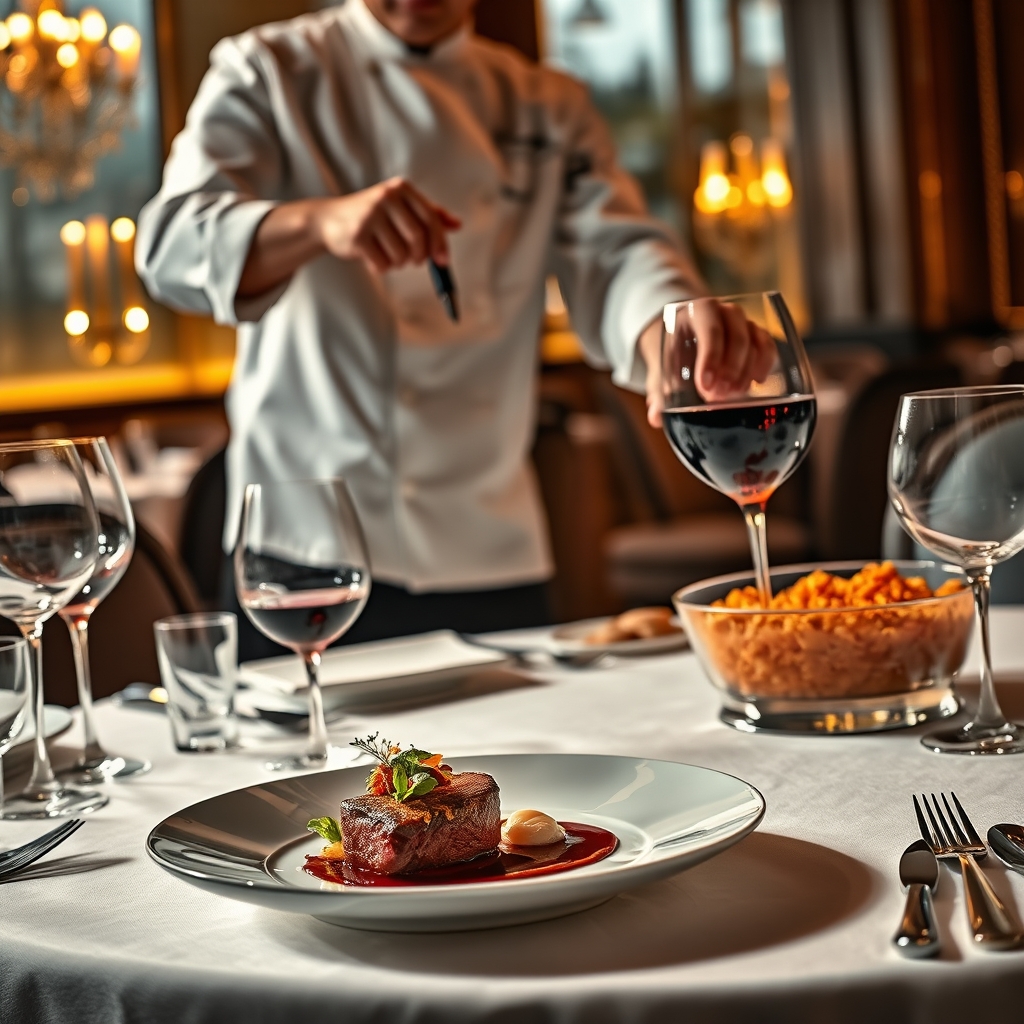
No fine dining experience is complete without the perfect wine pairing. Sommeliers, the unsung heroes of the dining world, meticulously select wines to complement each course, enhancing the flavors and elevating the meal. A crisp Chablis might cut through the richness of a buttery lobster dish, while a bold Barolo could stand up to the intensity of a slow-cooked lamb shank. The art of wine pairing lies in balance—finding the harmony between the dish and the drink, where neither overpowers the other but instead creates a symphony of taste.
Omakase: Trusting the Chef’s Vision
Originating from Japan, the omakase dining experience is the ultimate act of trust between diner and chef. Translating to “I’ll leave it to you,” omakase allows the chef to craft a meal based on the freshest seasonal ingredients and their creative instincts. This style of dining is deeply personal, as the chef often engages with guests, explaining the inspiration behind each dish. Whether it’s a delicate piece of sashimi or a meticulously plated artisanal dish, omakase is a celebration of the chef’s expertise and the diner’s willingness to surrender to the journey.
Farm-to-Table: A Return to Authenticity
In an era where diners crave authenticity and sustainability, farm-to-table dining has become a cornerstone of fine dining. Chefs who embrace this philosophy forge direct relationships with local farmers, foragers, and artisans, ensuring that every ingredient is fresh, seasonal, and ethically sourced. This approach not only supports local communities but also allows the natural flavors of the ingredients to shine. A farm-to-table tasting menu might feature heirloom tomatoes bursting with summer sweetness or foraged mushrooms with earthy depth, each bite a connection to the land and the hands that nurtured it.
The Future of Fine Dining: Innovation Meets Tradition
The world of fine dining is in constant evolution, with chefs continually redefining what it means to create a gastronomic experience. While some embrace the latest technologies, others look to the past, reviving forgotten techniques and ingredients. What remains constant, however, is the commitment to excellence—a dedication to crafting meals that are not just eaten but remembered. Whether it’s a signature dish that defines a restaurant or a seasonal tasting menu that captures the essence of a moment, fine dining is about more than food. It’s about passion, creativity, and the relentless pursuit of perfection, one plate at a time.
Stepping into a Michelin-starred restaurant is like entering a different world, where every detail is designed to transport you. The soft glow of candlelight, the clink of crystal glasses, the hushed anticipation as the first course arrives—these are the moments that linger long after the meal is over. It’s a reminder that dining is not just about nourishment, but about connection, artistry, and the sheer joy of savoring something extraordinary. In a fast-paced world, fine dining offers a rare opportunity to slow down, indulge, and appreciate the beauty of a meal crafted with care and intention.